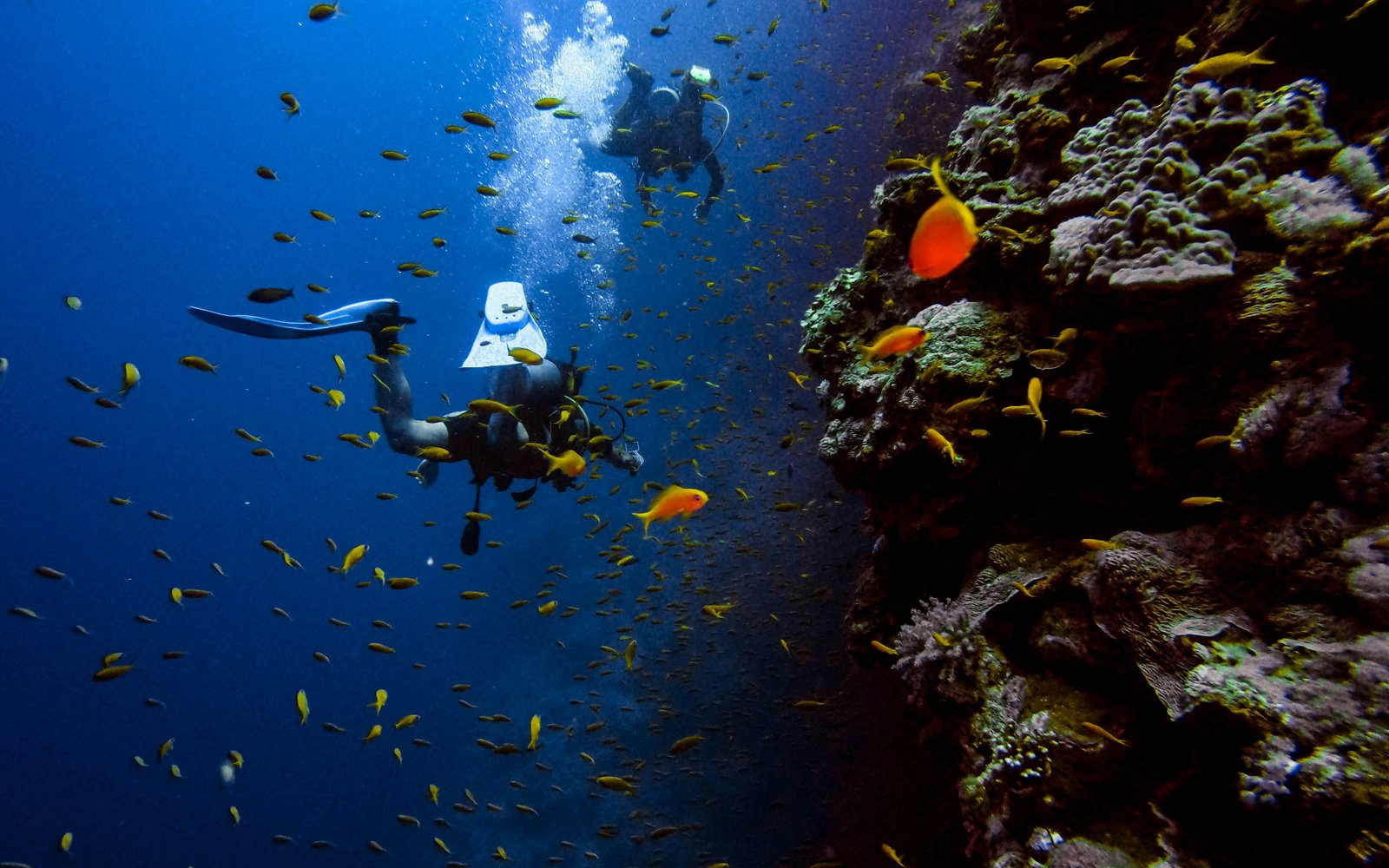
Below the surface of Komodo, the scenery changes completely. Sunlight fades into blue, coral walls rise from the seafloor, and schools of fish move with the rhythm of the current. At Crystal Rock, these elements come together around a dramatic underwater pinnacle that has become one of the notable dive sites in the area.
The experience here is less about reaching a single viewpoint and more about watching the seascape transform as you move around the rock. Shallow coral gardens, steep reef faces, open blue water, and passing marine life can all become part of the same dive.
Here are six underwater landscapes that reveal why Crystal Rock is such an interesting place to explore.
Imagine descending through clear water and gradually seeing a dark rock formation emerge below. That is the kind of scene that defines Crystal Rock.
The pinnacle rises from deeper water, creating walls and slopes that attract marine life at different depths. From above, the formation can look relatively small. Underwater, however, its vertical structure creates a much more expansive landscape.
This changing perspective is part of what makes the site interesting for divers and underwater photographers.
There is no single color dominating the reef.
Hard corals form the foundation, while soft corals, sea fans, and sponges add different shapes and textures across the rock. Small reef fish move between these formations, occasionally disappearing into the coral before reappearing in another section.
Look closely and the scene becomes more detailed. Step back and the reef turns into a wide composition of color against the surrounding blue.
At some points, the solid structure of the reef gives way to nothing but blue.
This transition creates one of the most dramatic views at Crystal Rock. Instead of having a coral wall filling the entire frame, divers can look outward into open water where larger fish may pass through.
Visibility can reach around 20–40 meters under favorable conditions, according to PADI, although visibility naturally varies with weather and local conditions.
For photographers, the open-water backdrop also creates a sense of scale that makes the underwater pinnacle appear even more impressive.
Sometimes the reef itself is not the most noticeable thing around you.
A school of fish can suddenly move across the scene, turning an ordinary section of blue water into a constantly changing spectacle. Fusiliers, anthias, and surgeonfish are among the species associated with the site.
Their movement is never completely predictable. They may spread across the reef, tighten into a dense group, or disappear into deeper water.
That constant motion gives the dive a different character from one moment to the next.
Crystal Rock is also a place where divers may want to keep their eyes away from the reef.
Larger marine animals can appear in the open water around the pinnacle, including reef sharks, trevally, tuna, barracuda, and eagle rays.
There is no guarantee of seeing a particular species, but the possibility changes the way divers explore the site. Instead of focusing only on coral details, it becomes worthwhile to occasionally look toward the blue.
That contrast between tiny reef life and larger pelagic animals is what gives the landscape its sense of depth.
The final element cannot be photographed as easily: the current.
Crystal Rock is influenced by tidal movement, and currents can be strong around the pinnacle. The water continuously moves around the formation, carrying nutrients through the reef and influencing where marine life gathers.
For experienced divers, this movement is part of the attraction. It adds another dimension to the landscape because the reef is never truly static.
However, strong and changing currents mean this is not a site to approach casually. PADI lists Crystal Rock as a site suited to advanced divers with appropriate experience.
The beauty of Crystal Rock is not concentrated in one particular view. It comes from the combination of rock, coral, blue water, marine life, and current.
One dive can move through several visual environments: a colorful reef face, a school of fish crossing the frame, an open-water horizon, and perhaps a larger animal appearing in the distance.
For travelers heading to Labuan Bajo, this underwater landscape offers a different way to experience Komodo one that is shaped not by peaks and beaches, but by what lies beneath the sea.
Explore more diving experiences and Komodo adventures with Travass.
Here are sailing packages from Travass.life that give you structure while allowing a better travel rhythm:
Choose how to reach us
We typically reply within minutes
This session has ended due to inactivity.