Ratenggaro Traditional Village: 6 Impressive Features of Sumba’s Living Heritage
Sumba is known for its distinctive traditional architecture, megalithic heritage, and cultural traditions that remain closely connected to everyday life. Among its most recognizable cultural destinations, Ratenggaro Village offers a remarkable glimpse into how architecture, ancestral beliefs, and community life exist together in one landscape.
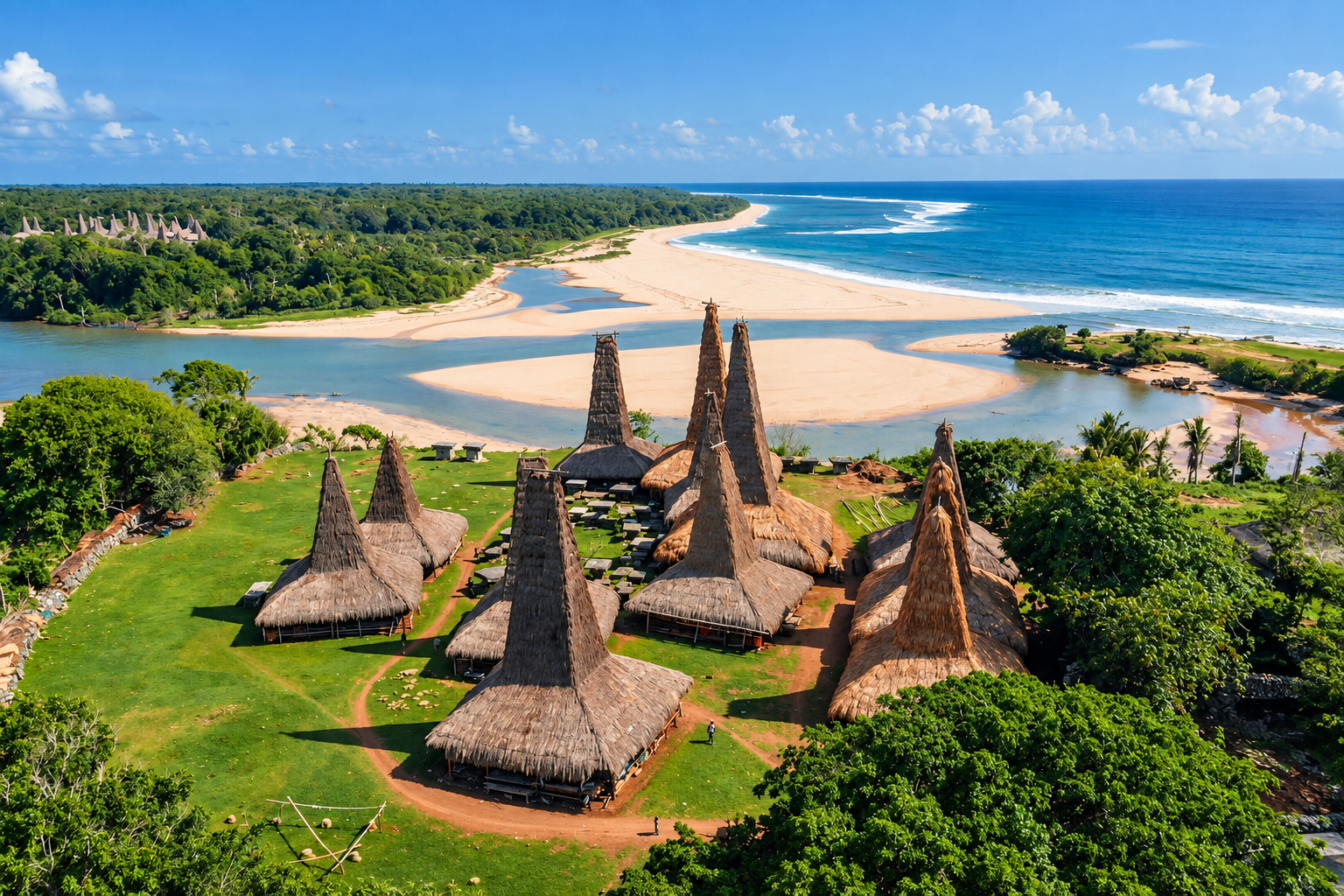
Located in Southwest Sumba, the traditional settlement is known for its towering thatched roofs, megalithic tombs, and distinctive village arrangement. Its location near the coast and the mouth of the Waiha River adds another layer to the experience, creating a setting where cultural heritage meets the natural landscape.
The Cultural Character of Ratenggaro
What makes this settlement particularly interesting is that its traditional elements are not presented as isolated attractions. The houses, tombs, communal spaces, and surrounding landscape form part of a cultural environment that reflects Sumbanese traditions.
The architecture itself provides an important introduction. Traditional Sumbanese houses are more than places to live, with their structures carrying symbolic and social meanings within the community.
1. Towering Uma Kelada Roofs
One of the first details visitors notice is the dramatic height of the traditional roofs. The houses, known locally as Uma Kelada, feature steep, towering thatched roofs that can reach around 15 meters. Visit Indonesia
Their unusual proportions make the settlement immediately recognizable. Beyond their visual character, the vertical structure reflects the traditional concept of dividing the house into different levels, each associated with particular functions and meanings.
The result is architecture that combines practical construction with cultural symbolism.
2. Ancient Megalithic Tombs
Another defining feature is the presence of megalithic burial structures throughout the settlement. Official tourism information notes that Kampung Ratenggaro contains hundreds of historic megalithic tombs, with Indonesia Travel citing 304 tombs in the area. Visit Indonesia
These stone structures provide an important connection to Sumba’s ancestral traditions. Their presence also shows that the village should not simply be viewed as a collection of traditional houses, but as a cultural landscape shaped by generations of belief and remembrance.
3. A Meaningful Village Arrangement
The arrangement of houses and ancestral stones creates another distinctive feature. Rather than appearing randomly positioned, traditional settlements in Sumba are closely connected to social relationships, customary practices, and spiritual beliefs.
Walking through Ratenggaro Village therefore offers more than an architectural experience. The relationship between buildings, open spaces, and burial stones helps visitors understand how the physical environment can reflect the values of a community.
4. Architecture Connected to Ancestral Beliefs
Traditional Sumbanese architecture has strong connections with local cosmology. The vertical arrangement of a traditional house is associated with different realms, while the house itself can function as a place for family activities, cultural ceremonies, and the preservation of sacred objects. Visit Indonesia
This makes the architecture particularly meaningful. Details that might initially appear decorative or unusual can carry cultural significance that has been passed down through generations.
5. A Living Cultural Landscape
Unlike heritage sites that exist only as historical remains, Ratenggaro Village represents a living cultural environment. Traditional architecture and ancestral customs continue to form part of the identity of the local community.
For visitors, this means the best way to experience the area is through observation and respect. Taking time to notice the details of the houses, stone structures, and village spaces can provide a deeper understanding of Sumba’s heritage.
6. A Coastal Setting With Cultural Depth
The village’s location adds another impressive dimension to the experience. Ratenggaro is situated near the coast and the mouth of the Waiha River, placing its cultural landscape alongside an expansive natural environment. Visit Indonesia
This combination creates a distinctive setting where traditional houses and megalithic structures can be experienced alongside the surrounding coastal scenery. It also makes the destination particularly appealing for travelers interested in combining cultural experiences with landscape photography.
Final Thoughts
Ratenggaro Village offers a memorable perspective on Sumba through the relationship between architecture, ancestral heritage, and the surrounding landscape. Its towering Uma Kelada roofs, megalithic tombs, traditional settlement pattern, and coastal setting each contribute to its distinctive character.
Rather than viewing the village only as a photogenic destination, travelers can appreciate it as a place where cultural knowledge and traditions continue to shape the environment. For anyone interested in understanding the deeper side of Sumba, Ratenggaro provides an impressive introduction to the island’s living heritage.
Our Travelers Have Experienced It
Here are sailing packages from Travass.life that give you structure while allowing a better travel rhythm: