Pantai Walakiri: 5 Beautiful Changes That Appear With the Tide
There is something quietly magical about a coastline that never looks exactly the same. Pantai Walakiri in East Sumba, Indonesia, offers this kind of experience through its changing shoreline, shifting water levels, and beautiful natural light. Rather than remaining static throughout the day, the beach continuously transforms as the tide moves in and out.
Located near Waingapu, Pantai Walakiri is known for its distinctive mangrove silhouettes and wide coastal landscape. When the water retreats, parts of the shore reveal reflective surfaces that capture the colors of the sky. This natural transformation creates a different atmosphere from one moment to another.
The Changing Landscape of Pantai Walakiri
One of the most interesting aspects of the coastline is how strongly it responds to the movement of the sea. The same location can feel spacious during low tide and dramatically different when the water begins returning.
These changes are not simply about the height of the water. They also influence reflections, visible sandbars, the appearance of mangrove trees, and the way sunlight reaches the shoreline.
1. Reflective Shorelines at Low Tide
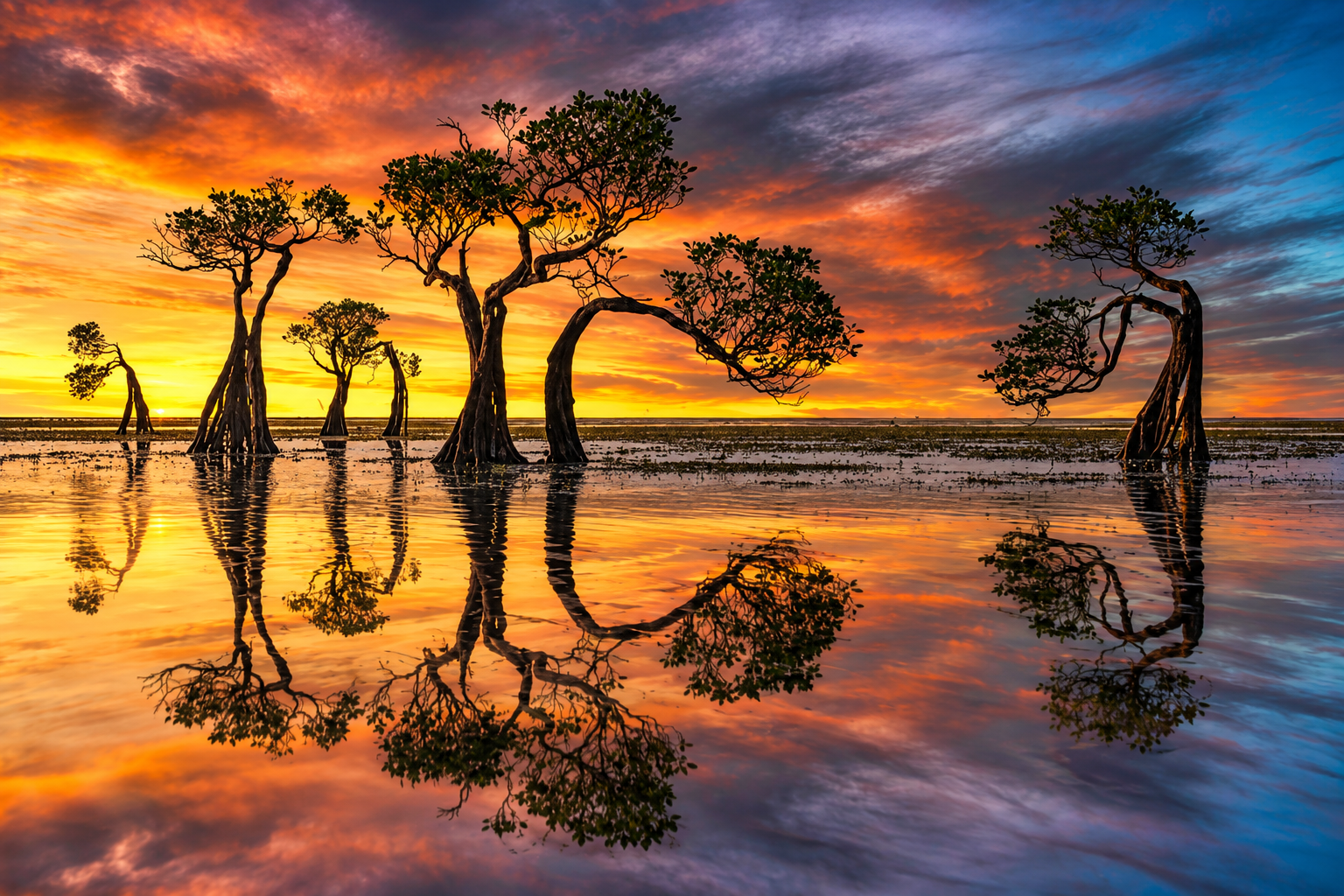
When the tide moves away from the coast, shallow pools of seawater can remain across sections of the sandy shoreline. These pools act almost like natural mirrors, reflecting clouds, sunlight, and the colors of the surrounding sky.
The smooth surface can create a minimalist landscape that works especially well for photography. Visitors may find that small details, such as ripples in the water or footprints across the sand, become part of the composition.
2. Mangrove Silhouettes in the Evening
The mangrove trees are among the most recognizable visual elements of the area. During sunset, their branches can appear as dark silhouettes against the warm colors of the horizon.
This contrast between the trees, shallow water, and evening sky gives the coastline its distinctive character. The scene can look especially dramatic when the sun approaches the horizon and the remaining daylight becomes softer.
3. Expanding Sandy Landscapes
Low tide also changes how much of the beach is visible. As seawater retreats, broader sections of sand emerge and create a more open coastal landscape.
The additional space allows visitors to appreciate the relationship between the shoreline and the surrounding environment. Instead of focusing on a single viewpoint, the beach becomes a landscape that can be experienced from several directions.
4. Changing Colors Across the Water
Another beautiful transformation happens through natural light. Blue tones may dominate during brighter hours, while the water can take on warmer shades as the sun begins to set.
Clouds, reflections, and the wet surface of the sand can further alter the appearance. Because of this, photographs taken only minutes apart can have noticeably different moods.
5. A Different View With Every Tide
Perhaps the most fascinating quality of Pantai Walakiri is its constantly changing appearance. The movement of the sea creates subtle differences in the landscape, making each visit feel less predictable.
A location that appears wide and open during low tide may become more intimate as the water returns. Meanwhile, the changing position of sunlight can completely transform the atmosphere without altering the landscape itself.
Best Time to Experience the Changes
For travelers hoping to capture the beach at its most atmospheric, late afternoon is a popular period to consider. The combination of changing tides and approaching sunset can produce striking contrasts between the sky, water, sand, and mangrove silhouettes.
However, tide conditions vary, so checking local tide information before visiting is recommended. Visitors should also allow enough time to observe the coastline rather than arriving only for the final minutes of sunset.
Final Thoughts
Pantai Walakiri shows how a destination can offer different visual experiences without needing dramatic structures or elaborate attractions. The movement of the tide naturally reshapes the shoreline, while sunlight adds another layer of transformation throughout the day.
From reflective sand and shallow pools to striking mangrove silhouettes, each change contributes to the character of the coast. For travelers exploring East Sumba, taking time to observe these details can make the visit more memorable and offer a different perspective on the island’s natural beauty.
Our Travelers Have Experienced It
Here are sailing packages from Travass.life that give you structure while allowing a better travel rhythm: