Cunca Rami: 7 Enchanting Layers of a Hidden Waterfall
Flores has a way of turning a simple journey into part of the destination. Beyond the islands and coastal scenery of Labuan Bajo, the mainland reveals forests, farmland, mountain landscapes, and waterfalls that offer a completely different perspective of the region. Cunca Rami is one of those places, combining a forest setting with a journey that passes through changing rural landscapes.
Located in Manggarai Barat, the waterfall is associated with the tropical Mbeliling area. The name itself comes from local terminology, with “cunca” referring to a waterfall and “rami” meaning forest. In other words, its name reflects its setting: a waterfall surrounded by forest.
1. The Village Is the Beginning
The experience does not begin when the waterfall comes into view. It starts from the surrounding villages, where the landscape provides an introduction to everyday life in Flores.
Depending on the route used, travelers may pass agricultural areas, gardens, and rural paths before entering the forest. This transition makes the journey feel more immersive because the scenery changes gradually rather than all at once.
2. A Trail Through Tropical Greenery
The next layer is the forest trail. Walking through the Mbeliling landscape brings travelers into a noticeably different environment, with dense vegetation and cooler surroundings.
The trek has also been described as part of the attraction itself. Older destination references describe routes passing through plantations and agricultural land before reaching the waterfall, making the walk an opportunity to see both natural and cultivated landscapes.
For anyone who enjoys walking rather than simply arriving at a viewpoint, this part of the journey can become one of the most memorable sections.
3. The Landscape Keeps Changing
One interesting feature of the route is its variety. Instead of following one type of scenery throughout the journey, travelers can encounter forest vegetation, farmland, streams, and changing terrain.
This makes the trek particularly rewarding for photographers. A wide landscape can capture the surrounding hills, while closer shots can focus on leaves, crops, tree trunks, or small streams along the path.
The journey becomes a collection of smaller scenes rather than a single destination.
4. Cunca Rami Appears Through the Forest
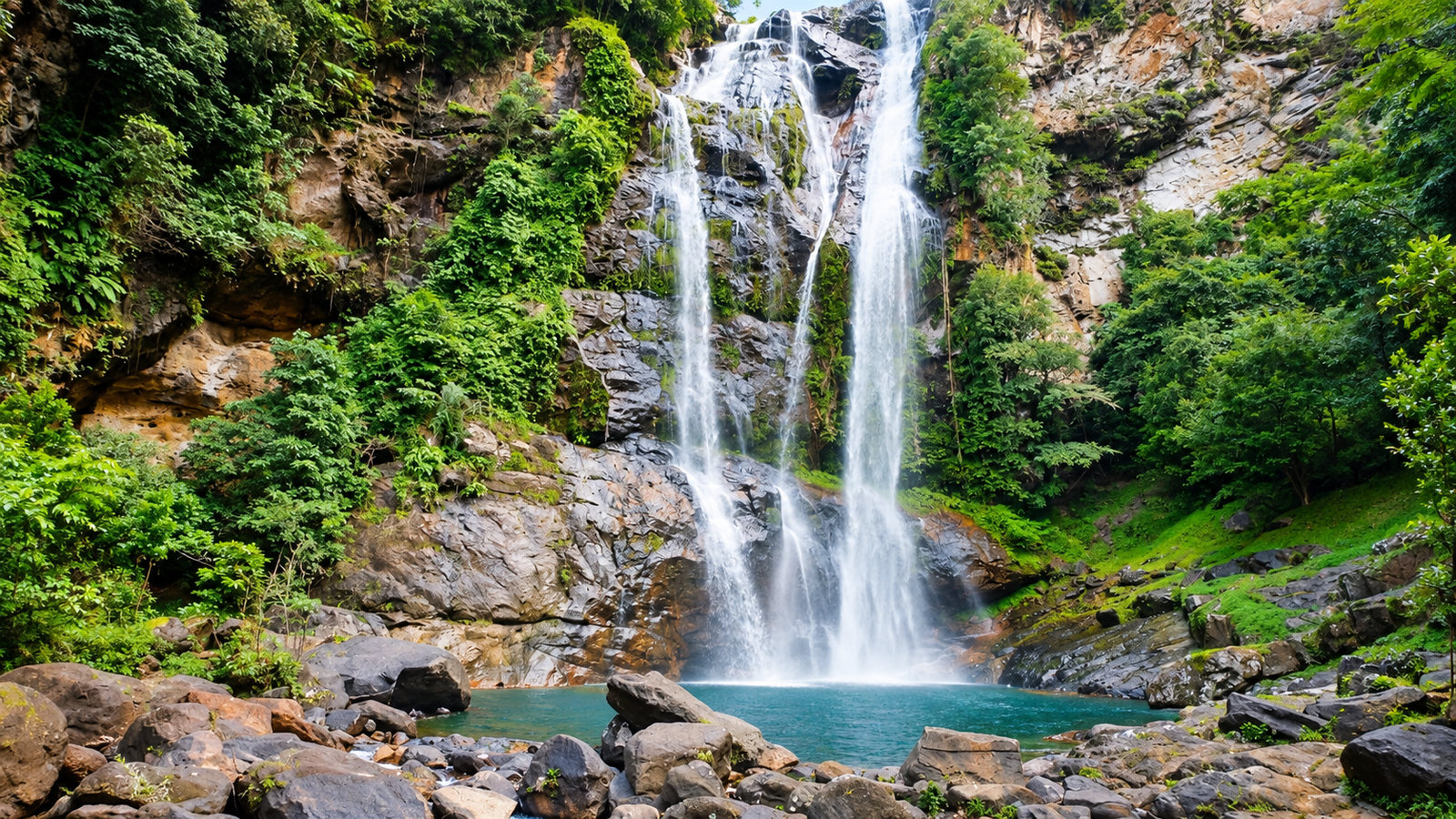
Eventually, the sound of flowing water begins to distinguish itself from the surrounding forest. The waterfall gradually becomes visible between the vegetation, creating a natural reveal after the trek.
Recent reporting describes the waterfall as being surrounded by dense tropical forest, with water falling into a natural pool below.
This gradual reveal is part of what gives the destination its character. Instead of seeing the entire landscape immediately, visitors experience it in stages.
5. A Natural Pool Beneath the Falls
At the base of the waterfall, water collects in a natural pool formed by the flow from above. This has long been one of the attractions associated with the site, with travel references describing the pool as suitable for swimming when conditions allow.
However, natural pools should always be approached carefully. Water levels and currents can change after rainfall, while wet rocks can become slippery. Check local conditions and follow guidance before entering the water.
6. A Different Kind of Flores Photography
For photographers, the destination offers more than a standard waterfall composition. The surrounding forest can be used as a natural frame, while the falling water creates movement against the darker textures of rocks and vegetation.
Try photographing from different distances. A wide frame can show the relationship between the waterfall and forest, while a closer composition can emphasize water droplets, moss, rocks, and leaves.
These details help tell the story of the journey rather than simply documenting the final viewpoint.
7. The Reward Is the Whole Journey
The most interesting part of Cunca Rami may be that the waterfall is only one part of the experience. The village, agricultural landscapes, forest trail, changing terrain, and natural pool all contribute to the journey.
For travelers planning a Labuan Bajo travel guide, adding a mainland waterfall can create a useful contrast to boat trips and coastal destinations. It allows visitors to experience another side of Manggarai Barat without limiting the trip to the sea.
Before visiting, confirm current access conditions and consider arranging a local guide, especially if you are unfamiliar with the trail. Responsible travel is equally important: stay on appropriate paths, avoid damaging vegetation, and carry your waste back with you.
For travelers willing to trade a straightforward sightseeing stop for a journey through rural and tropical landscapes, Cunca Rami offers a rewarding way to experience the inland character of Flores. The waterfall may be the destination, but the changing scenery along the way is what gives the adventure its layers.
Our Travelers Have Experienced It
Here are sailing packages from Travass.life that give you structure while allowing a better travel rhythm: