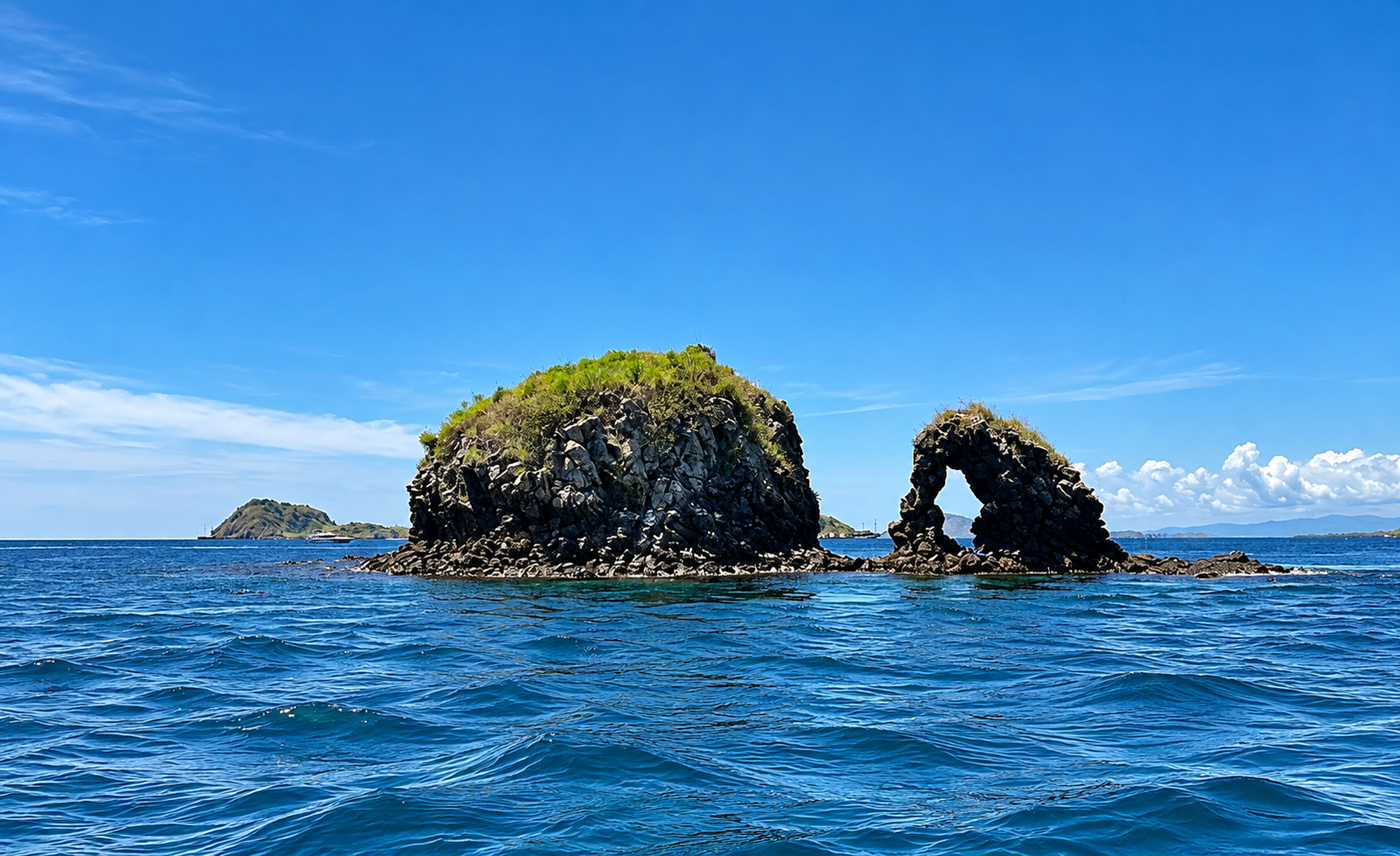
From the surface, Batu Bolong may look like a small rocky formation surrounded by the blue waters of Komodo. Its name itself refers to a “hole in the rock,” inspired by the distinctive opening in the exposed formation.
But the scenery changes completely once you look beneath the surface.
Walls covered in coral descend into deeper water. Reef fish move between colorful formations, while larger marine animals can appear in the open blue. The movement of the current adds another layer, constantly changing the underwater environment.
The site is located in the Lintah Strait within Komodo National Park and is known as a pinnacle and wall dive. PADI lists a maximum diving depth of around 30 meters and notes sightings that can include coral, reef fish, barracuda, sharks, and turtles.
Rather than being just a rock surrounded by ocean, Batu Bolong becomes a completely different landscape underwater.
The story begins before reaching the water.
From a boat, the rocky formation gives only a small impression of what lies below. The exposed rock is recognizable by its rugged surface and natural opening, but much of its structure continues beneath the sea.
Underwater, Batu Bolong becomes a larger and more complex formation. Reef slopes and walls extend toward deeper water, creating different areas for coral and marine life.
The change in scale is part of the experience. Instead of seeing the whole formation at once, divers encounter it gradually, moving from one reef face to another and discovering coral-covered sections along the way.
PADI classifies the site as both a reef and wall dive, with a maximum depth of approximately 30 meters.
Color begins to take over as you move closer to the reef.
Hard corals cover sections of the rock, creating small shelters and feeding grounds for reef fish. Soft corals, sea fans, and other marine organisms add different shapes and textures to the underwater landscape.
Around Batu Bolong, the coral does more than simply add color. It creates a living environment where smaller marine creatures can find food and shelter.
The scenery can also change with depth. Shallow sections may feel bright and vibrant, while deeper areas can create darker and more dramatic views.
This contrast makes the reef interesting from both a diver’s and photographer’s perspective. A single wall can contain wide coral formations, small crevices, and marine life moving between them.
The combination of rock and coral also makes the underwater landscape feel much more layered than the simple silhouette visible from the surface.
Then the reef begins to move.
Small fish weave between the coral while larger schools can pass across the reef in shifting formations. Reef fish are among the common marine life associated with the site, alongside other larger species.
There is no fixed composition underwater.
A section of coral that appears quiet can suddenly become filled with fish. Moments later, the group may move away, revealing the reef behind them.
This constant movement gives Batu Bolong a natural rhythm. Instead of looking at a static reef, divers experience an environment that changes continuously around them.
The movement can also create interesting interactions between the reef and the open water. Smaller fish often remain close to the coral, while larger animals may pass farther away.
For underwater photographers, these changes can make the same location look completely different from one moment to another.
Not every moment is about looking directly at the reef.
Turn away from the wall and the scene can suddenly become much wider. The coral disappears into the distance while the surrounding water opens into shades of deep blue.
This is where the scale of the location becomes easier to appreciate.
The contrast between solid rock and open water creates a natural frame for passing fish, rays, or other marine animals. Instead of being surrounded by coral, divers can briefly find themselves looking into a much larger blue space.
The open water also gives the reef a sense of isolation. The rock formation appears to stand on its own against the surrounding ocean, even though it is part of a much larger marine ecosystem.
For photographers, this transition can create atmospheric images that show the relationship between the reef and the surrounding sea.
The fifth story belongs to the larger visitors.
Sharks, rays, barracuda, and turtles are among the marine animals reported around Batu Bolong.
Of course, wildlife sightings can never be guaranteed. That uncertainty is part of what makes looking into the blue so interesting.
A diver may be focused on a small reef fish one moment and then notice a larger silhouette passing farther away.
It is a reminder that the reef is not an isolated ecosystem. It connects to a much larger marine environment beyond the rock itself.
PADI also notes the presence of pelagic creatures around the pinnacle, adding another dimension to the experience for divers who look beyond the reef walls.
These encounters can be brief. A shark may disappear into the blue, while a turtle may remain closer to the reef. The unpredictability makes every dive feel slightly different.
Water movement is an important part of diving in Komodo.
At Batu Bolong, currents can influence where divers explore and where marine life gathers. Komodo Dive Center describes the site as being affected by strong currents, with different sides of the rock offering different diving conditions depending on tidal movement.
The current can also shape the behavior of marine life. Smaller fish seek shelter around the reef, while larger animals may use areas of moving water as feeding grounds.
This creates a fascinating contrast. The same current that makes the dive challenging also contributes to the activity surrounding the reef.
Conditions can change with the tide, so choosing the appropriate timing and route is important. PADI notes that current conditions vary across Komodo and recommends matching the dive site with the diver’s certification, recent experience, and conditions on the day.
For that reason, Batu Bolong is best approached with proper preparation and guidance from an experienced local dive professional.
There is no single view that defines Batu Bolong.
Its character comes from the combination of rock, coral, fish, open water, marine encounters, and constantly moving currents. Each element changes the scene around it, creating an underwater experience that can feel different from one moment to the next.
What begins as a small rocky formation from the surface becomes a much larger world below. Coral covers the walls, fish move through the reef, and larger marine animals can appear beyond the formation.
That contrast is what makes the site memorable.
For travelers visiting Labuan Bajo, diving here offers another perspective on Komodo, one that cannot be experienced from a viewpoint or beach.
The most interesting part may simply be the transition between the two worlds: leaving the surface behind and gradually discovering what lies beneath it.
Here are sailing packages from Travass.life that give you structure while allowing a better travel rhythm:
Choose how to reach us
We typically reply within minutes
This session has ended due to inactivity.