Satonda Island 2026: A Hidden Gem in Indonesia's Coastal Paradise
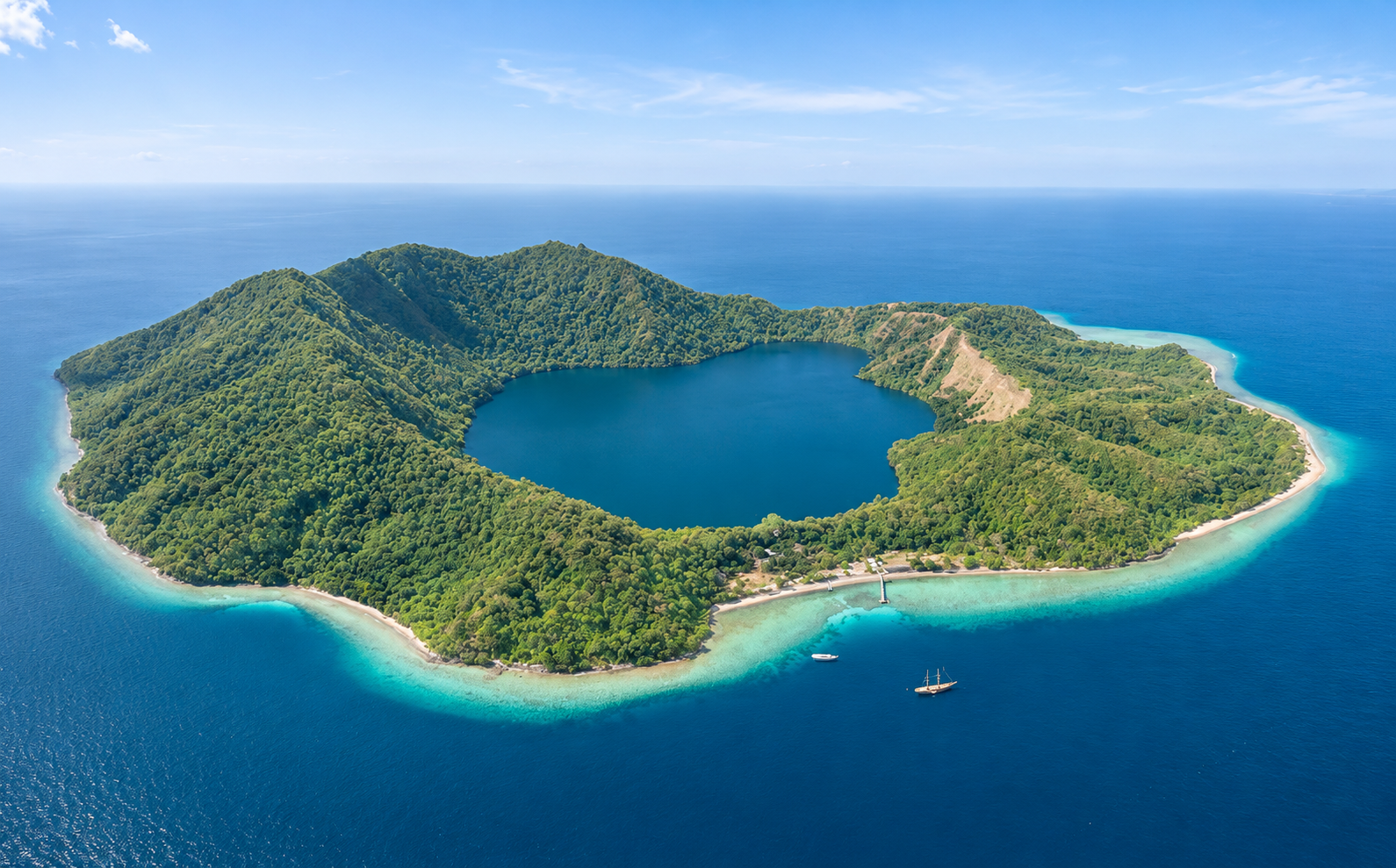
Off northern Sumbawa in West Nusa Tenggara, Satonda Island offers a landscape shaped by volcanic history and surrounded by the Flores Sea. Its quiet shoreline, forested slopes, and unusual saltwater lake create a setting unlike a typical tropical island. For travellers on a sailing journey through this part of Indonesia, it is a stop for nature and geology.
The island is best known for a crater lake at its centre. The lake sits inside an old volcanic basin, creating two contrasting waterscapes in one destination: the sea around the island and a lake enclosed by green hills.
Satonda Island: How It Forms
Satonda Island is volcanic in origin. It is the exposed part of an ancient volcano, while its central depression formed through volcanic activity thousands of years ago. The basin eventually became a lake. Its saltwater character is linked to the 1815 eruption of Mount Tambora on nearby Sumbawa.
Indonesia’s Geological Agency explains that the eruption generated tsunami waves which crossed the crater rim and carried seawater into the basin. The water became trapped after the lake lost its direct connection with the sea. Geological changes and evaporation later contributed to its unusual chemistry, including high salinity and alkalinity. This history makes the site valuable for both visitors and geological study.
A Remarkable Saltwater Crater Lake
The lake is the island’s defining feature. Enclosed by green slopes, its calm surface contrasts with the open sea beyond the coast. Its salty water supports stromatolites: layered structures formed through the activity of microorganisms, including cyanobacteria.
Stromatolites are scientifically important because they provide clues about environments from Earth’s distant past. These formations make the lake more than a scenic photo stop; they show how isolated water systems can develop distinctive ecosystems. Admire them without touching or disturbing this sensitive natural environment.
Coastal Scenery and Island Atmosphere
Beyond the crater, small beaches, clear tropical water, and views across the sea offer a peaceful place to pause after a boat journey. Dry tropical vegetation covers the island’s slopes, framing the central lake and coastline.
The atmosphere is quieter than at developed holiday destinations. Visitors should treat the stop as a nature visit rather than a full-service beach holiday. Bring drinking water, sun protection, and personal essentials, and take all rubbish back with you.
What to Do During a Visit
A visit can combine a short walk from the landing area to the crater lake with time by the coast. Follow local guidance and marked paths, especially in hot weather. The walk offers changing views of the shoreline, forested slopes, and enclosed lake.
Boat trips may also include swimming or snorkelling in suitable coastal areas, depending on sea conditions and the operator’s itinerary. Check conditions before entering the water, use safety equipment, and avoid restricted areas. Responsible choices help protect the island’s fragile habitats.
Planning Your Trip
The island lies off northern Sumbawa, in Dompu Regency, West Nusa Tenggara. Travellers usually reach it by boat from the Sumbawa coast, often as part of a wider sailing itinerary. Confirm departure points, transfer times, fees, and landing arrangements with a local operator, as services vary with weather and season.
Dry-season conditions may make transfers and outdoor walks more comfortable, but the sea can change quickly. Check the forecast before departure and keep your schedule flexible. Allow extra time if combining the visit with Mount Tambora or other Sumbawa destinations.
For a more rewarding stop, allow enough time to enjoy the lake viewpoint and shoreline without rushing. The island is best appreciated at a relaxed pace, with attention to the landscape, changing light, and the natural details around the crater.
A Meaningful Stop in Sumbawa
Satonda Island brings together volcanic history, unusual lake chemistry, and peaceful coastal scenery. Its appeal lies in the contrast between the saltwater crater lake and the Flores Sea, alongside rare microbial structures. For travellers sailing around Sumbawa, it is memorable stop that connects natural beauty with Indonesia’s geological story.
Travel thoughtfully, respect local guidance, and leave the landscape as you found it. These simple choices help preserve this remarkable place for future visitors.
Our Travelers Have Experienced It
Here are sailing packages from Travass.life that give you structure while allowing a better travel rhythm: