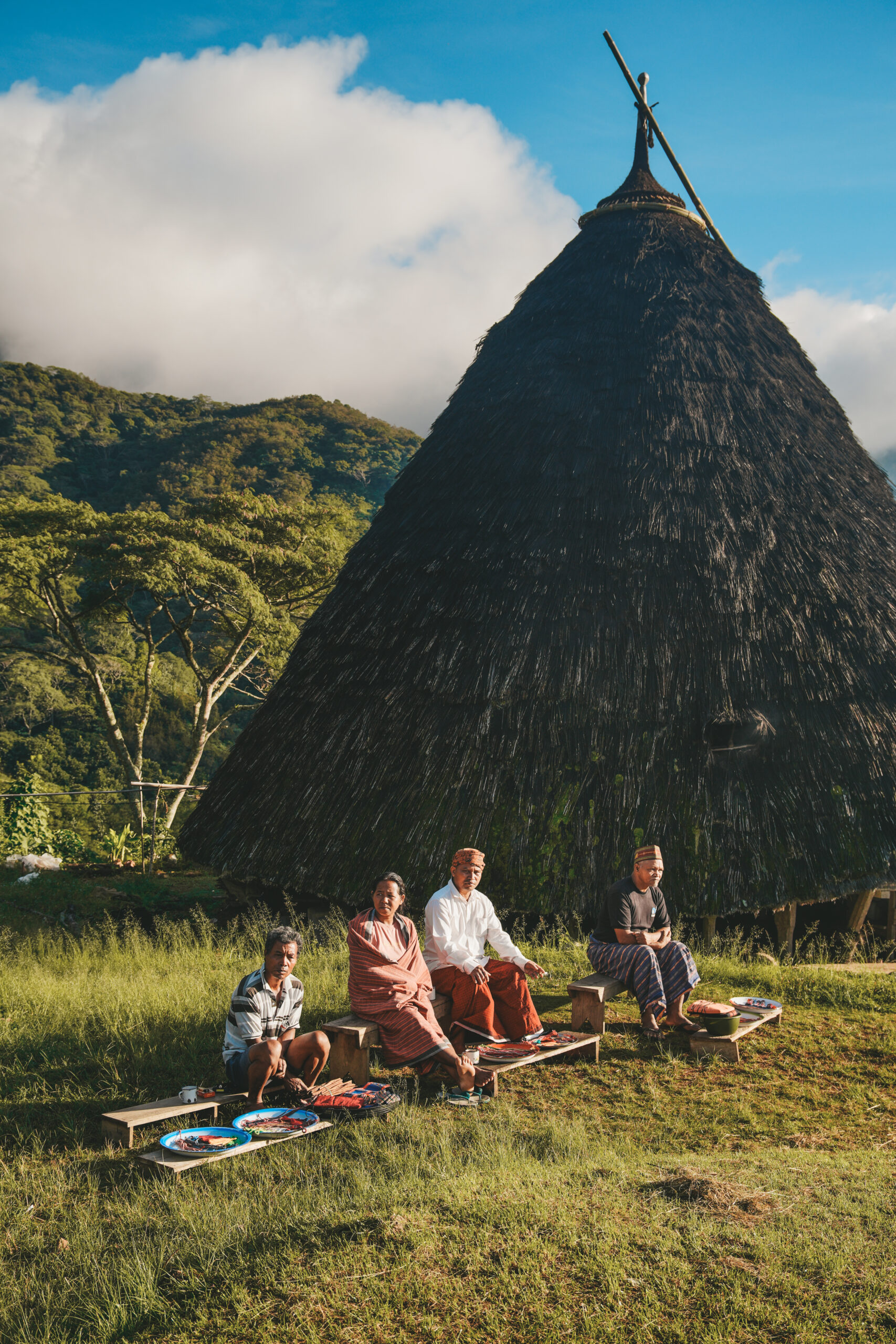
Hidden high in the mountains of Flores, Wae Rebo is one of Indonesia’s most remarkable traditional villages — often described as a village above the clouds.
Recognized as a UNESCO heritage site for its cultural preservation and traditional architecture, Wae Rebo is home to the iconic Mbaru Niang houses: tall, cone-shaped communal homes built entirely with natural materials and passed down through generations.
Reaching the village itself is part of the experience. Located a few hours from Labuan Bajo, the journey continues with a scenic mountain trek through dense forest and misty hills before the village slowly appears among the clouds.
Far removed from modern city life, Wae Rebo offers a rare glimpse into the traditions, hospitality, and daily life of the Manggarai people of Flores. The peaceful atmosphere, cool mountain air, and dramatic surroundings make it feel like stepping into another world.
The village is also known for its authentic Flores coffee, traditionally grown in the highlands surrounding Wae Rebo. Served warm inside the traditional houses, the locally grown coffee has a rich, earthy character shaped by the fertile volcanic soil and mountain climate of Flores — becoming an essential part of the Wae Rebo experience itself.
For travelers exploring Flores beyond Komodo, Wae Rebo remains one of the island’s most meaningful cultural experiences.
Wae Rebo is a traditional village located in the Manggarai Regency of West Flores, Indonesia. Perched at approximately 1,200 metres above sea level, it is often called a village above the clouds — and for good reason. Most mornings, the village is literally immersed in low-hanging clouds and mist, creating a mystical, otherworldly atmosphere that photographs struggle to fully capture.
Wae Rebo is home to the indigenous Manggarai people, one of the oldest communities in Flores. Unlike many traditional villages in Indonesia that have gradually modernised, Wae Rebo has remained remarkably preserved — maintaining its ancestral architecture, customs, and way of life across generations. This cultural integrity earned it recognition as a UNESCO World Heritage Cultural Site, celebrating its outstanding approach to living heritage preservation.
The most visually striking feature of Wae Rebo is its architecture. The village is defined by its Mbaru Niang houses — tall, cone-shaped communal structures that rise dramatically from the forest floor like something out of a fairy tale. Each house stands roughly 15 metres high, with a steeply pitched thatched roof that sweeps almost to the ground.
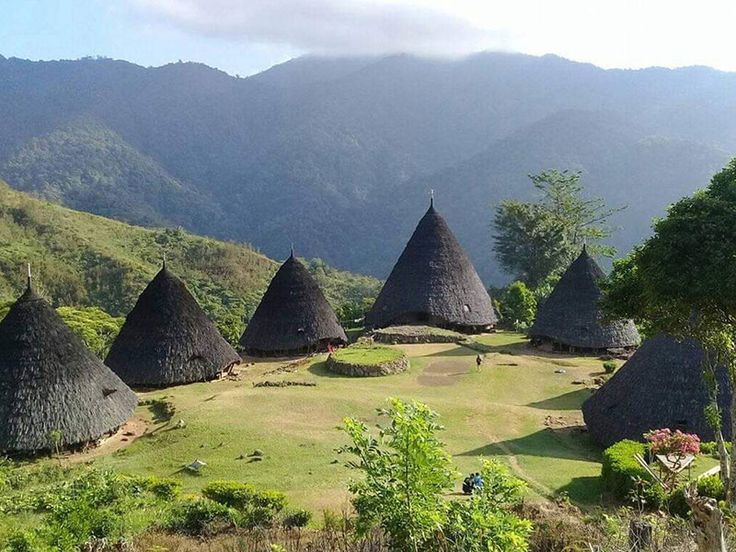
Built entirely from natural materials — wood, bamboo, rattan, and palm leaves — these structures are the result of generations of accumulated knowledge. No nails are used. The construction follows traditional methods passed down through the community, and the buildings are designed to house multiple families together in a communal living arrangement that reflects the social values of the Manggarai people.
There are exactly 7 Mbaru Niang in Wae Rebo, with the central house — the Niang Gendang — serving as the spiritual and social heart of the community. Entering one of these houses feels like stepping back centuries, with its five internal levels each serving a distinct functional purpose, from sleeping quarters to food storage and sacred objects.
Still deciding whether to include Wae Rebo in your Flores itinerary? Here are 7 reasons why this village above the clouds deserves a place at the top of your travel list.
Unlike many “traditional villages” that have become tourist attractions, Wae Rebo is a real, living community with minimal external influence. The Manggarai people continue to live exactly as their ancestors did.
Wae Rebo sitting above the clouds is not a metaphor — mornings here are genuinely wrapped in mist, creating dramatic views that rival anything in Southeast Asia.
03. The Trek Itself Is an Adventure
The 9 km trail through dense forest, river crossings, and mountain ridges is as memorable as the village itself — a proper jungle trekking experience with a spectacular reward at the end.
04. Authentic Manggarai Hospitality
Visitors are welcomed with a traditional ceremony, offered locally grown coffee, and invited to sleep overnight inside the Mbaru Niang — a privilege almost nowhere else in the world offers.
05. UNESCO-Recognised Cultural Heritage
Wae Rebo’s recognition as a living UNESCO cultural heritage site places it among the world’s most important preserved communities — a meaningful destination with deep cultural significance.
06. Some of Indonesia’s Best Coffee Grows Here
The highlands surrounding Wae Rebo produce exceptional Flores coffee — earthy, full-bodied, and unlike anything you’ll find in a city café. Drinking a cup here, inside a Mbaru Niang, is an experience in itself.
07. It Feels Like Stepping Into Another World
There is no electricity, no Wi-Fi, and no noise from the modern world. The peaceful silence of Wae Rebo, broken only by birdsong and wind, creates a rare feeling of genuine disconnection and presence.
The trek to Wae Rebo begins at the small village of Denge. The trail climbs steadily through one of the most beautiful forest landscapes in Flores — dense tropical rainforest, mossy paths, bamboo groves, and occasional glimpses of the mountain valley below. At roughly the halfway point, a small shelter provides a resting spot with panoramic views over the hillside.

Most trekkers complete the route in 3–4 hours. The path is well-marked but can be slippery after rain, so proper footwear is essential. A local guide is highly recommended — not just for safety, but because they share stories about the Manggarai forest traditions along the way, enriching the entire experience.
As you near the top, the trees thin and the village slowly comes into view — its cone-shaped Mbaru Niang rooftops emerging from the mist. It’s a moment many travellers describe as genuinely emotional. According to Lonely Planet, the approach to Wae Rebo is among the most dramatic village arrivals in all of Indonesia.
One of the most unexpected pleasures of visiting Wae Rebo is the coffee. The highlands surrounding the village above the clouds are covered in coffee plants — organically grown, naturally processed, and harvested by hand by the Manggarai community. The result is a cup of Flores coffee that carries the full character of its environment: earthy, rich, slightly smoky, and deeply aromatic.
The fertile volcanic soil and mountain climate of the Flores highlands create ideal conditions for coffee cultivation. At over 1,000 metres elevation, the beans develop slowly, building complexity and depth. Varieties grown in and around Wae Rebo are primarily Arabica, though some Robusta can also be found in the lower slopes.
Sitting inside a Mbaru Niang, wrapped in the cool mountain air, and being handed a warm cup of locally grown Flores coffee by your host is — for many visitors — the defining moment of the Wae Rebo experience. It is, quite simply, coffee as it was meant to be drunk: unhurried, meaningful, and rooted in place. For more context on Flores coffee culture, the scientific literature on specialty highland coffee explains what makes volcanic altitude growing conditions so unique.
Here are sailing packages from Travass.life that give you structure while allowing a better travel rhythm:
Choose how to reach us
We typically reply within minutes
This session has ended due to inactivity.